How To Buy a Daughter
Choosing the sex of your baby has become a multimillion-dollar industry.
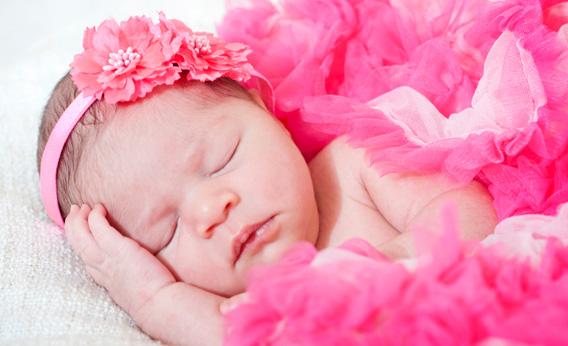
The conventional wisdom has always been that, given a choice, couples
would prefer sons. In the United States, families are using expensive
reproductive procedures so they can select girls instead.Photograph by Elena Shchipkova/iStockphoto/Thinkstock.
Megan Simpson always expected that she would be a mother to a daughter.
She had grown up in a family of four sisters. She liked sewing,
baking, and doing hair and makeup. She hoped one day to share these
interests with a little girl whom she could dress in pink.
Simpson, a labor and delivery nurse at a hospital north of Toronto,
was surprised when her first child, born in 2002, was a boy. That’s
okay, she thought. The next one will be a girl.
Except it wasn’t. Two years later, she gave birth to another boy.
Desperate for a baby girl, Simpson and her husband drove four hours
to a fertility clinic in Michigan. Gender selection is illegal in
Canada, which is why the couple turned to the United States. They paid
$800 for a procedure that sorts sperm based on the assumption that sperm
carrying a Y chromosome swim faster in a protein solution than sperm
with an X chromosome do.
Simpson was inseminated with the slower sperm that same day. Fifteen
weeks later, she asked a colleague at the hospital to sneak in an
after-hours ultrasound. The results felt like a brick landing on her
stomach: another boy.
“I lay in bed and cried for weeks,” said Simpson, now 36, whose name
has been changed to protect her privacy. She took a job in the operating
room so she would no longer have to work with women who were giving
birth to girls.
Simpson and her husband talked about getting an abortion, but she
decided to continue with the pregnancy. In the meantime, she looked for a
way to absolutely guarantee that her next child would be the daughter
she had always dreamed about. She discovered an online community of
women just like her, confiding deep-seated feelings of depression over
giving birth to boys. The Web forums mentioned a technique offered in
the United States that would guarantee her next baby would be a girl. It
would cost tens of thousands of dollars, money Simpson and her husband
did not have. Simpson waited until her third son was born. Then she
began to make some phone calls.
The conventional wisdom has always been this: Given a choice, couples
would prefer sons. That has certainly been the case in places like
China and India, where couples have used pregnancy screening to abort
female fetuses. But in the United States, a different kind of sex
selection is taking place: Mothers like Simpson are using expensive
reproductive procedures so they can select girls.
Just over a decade ago, some doctors saw the potential profits that
could be made from women like Simpson—an untapped market of young,
fertile mothers. These doctors trolled online forums, offering
counseling and services. They coined the phrase “family balancing” to
make sex selection more palatable. They marketed their clinics by giving
away free promotional DVDs and setting up slick websites.
These fertility doctors have turned a procedure originally designed
to prevent genetic diseases into a luxury purchase akin to plastic
surgery. Gender selection now rakes in revenues of at least $100 million
every year. The average cost of a gender selection procedure at
high-profile clinics is about $18,000, and an estimated 4,000 to 6,000
procedures are performed every year. Fertility doctors foresee an
explosion in sex-selection procedures on the horizon, as couples become
accustomed to the idea that they can pay to beget children of the gender
they prefer.
Inside a fourth-floor office suite off a palm-tree-lined street in
Encino, Calif., in an embryology lab, two men wearing maroon scrubs peer
into high-tech microscopes. The men are fertilizing human eggs with
sperm samples collected earlier that day. After fertilization and three
days of incubation, an embryologist uses a laser to cut a hole through
an embryo’s protective membrane and then picks out one of the eight
cells. Fluorescent dyes allow the embryologist to see the chromosomes
and determine whether the embryo is carrying the larger XX pair of
chromosomes or the tinier XY. The remaining seven cells will go on to
develop normally if the embryo is chosen and implanted in a client’s
uterus.
The lab is part of the Fertility Institutes, a clinic set up by
Jeffrey Steinberg, one of the most prominent gender selection doctors in
the United States. In his spacious, oak-paneled office down the hall,
Steinberg is surrounded by photos of his own naturally conceived
children. His clinic is the world leader for this gender selection
technique, known as preimplantation genetic diagnosis (PGD). “We’re by
far number one. Number two is not even a close second,” he said.
The United States is one of the few countries in the world that still
legally allows PGD for prenatal sex selection. The procedure was
designed in the early 1990s to screen embryos for chromosome-linked
diseases. It is illegal for use for nonmedical reasons in Canada, the
U.K., and Australia.
Steinberg’s gender-selection patients are typically around 30 years
old, educated, married, middle to upper class. They also typically have a
couple of children already, unlike the women in his waiting room
undergoing in vitro fertilization and hoping to conceive any child at
all.
Statistics on gender selection are sparse. A 2006 survey by Johns
Hopkins University found that 42 percent of fertility clinics offered
PGD for gender selection. But that was half a decade ago, before many
clinics undertook aggressive online marketing campaigns to drive the
demand.
Gender selection is the primary business at Steinberg’s Fertility
Institutes, with nurses casually asking couples in the waiting room
whether they, too, are interested in selecting the gender of their baby.
Business quadrupled when Steinberg started advertising PGD for gender
selection.
Steinberg said he never intended to make gender selection his niche.
But then the ethics committee of the American Society for Reproductive
Medicine, a nonprofit organization that attempts to set standards in the
industry, came out against prenatal sex selection for nonmedical
reasons in 1994. The group said the practice would promote gender
discrimination and was an inappropriate use of medical resources. That
made Steinberg angry.
“I took it on as a challenge,” he said. “The fact that they didn’t
like it, and the fact that I saw nothing wrong with it, made me more
aggressive.”
He advertised in Indian-American and Chinese-American newspapers.
Local groups accused him of stoking cultural biases for boys in those
communities, and his ads were pulled by the publishers.
In 2009, Steinberg came under a worldwide media firestorm when he
announced on his website that couples could also choose their baby’s eye
and hair color, in addition to gender. He revoked the offer after
receiving a letter from the Vatican. Steinberg seems to enjoy the
attention, whether good or bad. After all, the publicity only helps
bring in more patients to his clinics.
Many women who undergo PGD for gender selection discovered the
procedure in online forums. Reading the posts on these forums is like
entering another world. Users adorn their avatars with pink and princess
imagery. They talk about their desperation to have daughters. They
share notes on the process of going through PGD, recounting in detail
their own experiences: blood-test results, drug effects, in vitro
cycles.
Daniel Potter, the medical director of the Huntington Reproductive
Center, has written more than 1,000 posts for in-gender.com and answered
forum members’ questions about the procedure and its costs. He arranged
in-person and phone consultations with forum members, including Megan
Simpson. In 2011, he even started a personal website where he calls
himself the “gender selection expert.”
From posting on message boards to using Twitter, Facebook, and YouTube, fertility doctors have appropriated 21st-century marketing methods to bring a 21st
-century technology to the masses. Competition is stiff for
search-friendly domain names for clinic websites and sponsored Google
search ads. For example, there’s genderselection.com, not to be confused
with gender-selection.com. There’s also gender-select.com and
genderselectioncenter.com, all websites maintained by fertility clinics
promoting PGD. These sites are filled with glossy stock photos of happy
families, polished YouTube videos of doctors making their pitch, and
patient testimonials in numerous languages.
In May 2008, Simpson and her husband traveled to California to
undergo PGD at the Laguna Hills branch of the Huntington Reproductive
Center. There, she met up with some of the women she had made friends
with online. “We went shopping and picked out girly clothes and dreamed
of the day we could have a baby to wear them,” Simpson recalled.
Three days after arriving in California, Simpson underwent egg
retrieval surgery. Eighteen eggs were retrieved; of these, 11 were
mature and were fertilized.
Her husband left after the surgery to return home and take care of
their three boys. After resting for five days, Simpson returned to the
clinic for her embryo transfer.
She was met with devastating news: all of her embryos were found to be chromosomally abnormal. None were useable.
“I cried. And cried some more,” recalled Simpson. “All that money, the drugs, the travel, time off work. The money.”
Despite the financial and emotional setbacks, she wanted to try PGD
again, soon. Three months later, she was back in Laguna Hills. She had
taken out $15,000 on a line of credit to pay for the second attempt.
She went through the whole process again. This time, the embryos were
good to go. An ultrasound was used to guide a catheter containing the
embryos into her uterus. Six days later, Simpson took a pregnancy test.
It was positive.
When she was 15 weeks pregnant, she asked a friend at work to once
again sneak her into an after-hours ultrasound. Simpson was anxious,
haunted by the memory of her last ultrasound.
But this time, it was different. She was pregnant with a girl.
After nearly four years and $40,000, Simpson’s dreams of being a “girl-mommy” were finally going to come true.
Simpson gave birth to her daughter during a home delivery in her
bathtub in 2009. “The moment she was born, I asked if it was still a
girl,” she recalled.
Simpson had to work six days a week right up until the delivery and months afterward to repay the loan she took.
“My husband and I stared at our daughter for that first year. She was
worth every cent. Better than a new car, or a kitchen reno.”
Much of the evidence that Americans preferentially choose girls is
anecdotal, as no larger body tracks gender selection procedures. But
data from Google show that “how to have a girl” is searched three times
as often in the United States as “how to have a boy.” Many fertility
doctors say that girls are the goal for 80 percent of gender selection
patients. A study published in 2009 by the online journal Reproductive
Biomedicine Online found Caucasian-Americans preferentially select
females through PGD 70 percent of the time. Those of Indian or Chinese
descent largely chose boys.
So where does this preference come from? And with the sex-selection
rhetoric in the United States centered around “family balancing,” a
feel-good term that implies couples are rationally planning their
families, is it still sexist to choose for girls?
For Jennifer Merrill Thompson, the reasons were simple. “I’m not into
sports. I’m not into violent games. I’m not into a lot of things boys
represent and boys do,” she said. Thompson is the author of Chasing the Gender Dream, a self-published book that documents her use of gender-selection technology to conceive her daughter.
Interviews with several women from the forums at in-gender.com and
genderdreaming.com yielded the same stories: a yearning for female
bonding. Relationships with their own mothers that defined what kind of
mother they wanted to be to a daughter. A desire to engage in
stereotypical female activities that they thought would be impossible
with a baby boy.
The American Society for Reproductive Medicine says it’s concerned
that gender selection is leading otherwise healthy women to undergo
unnecessary medical procedures, and that fertility doctors might turn
their attention away from treating infertility to pursue a more
lucrative specialty. And the group points out the possible psychological
harm to children born through gender selection. They fear these
children would be pressured to live up to the stereotypes of the gender
that was picked out and paid for by their parents.
“It’s high-tech eugenics,” said Marcy Darnovsky, director of the
Center for Genetics and Society, a Berkeley, Calif. nonprofit focused on
reproductive technologies. “If you’re going through the trouble and
expense to select a child of a certain sex, you’re encouraging gender
stereotypes that are damaging to women and girls. …What if you get a
girl who wants to play basketball? You can’t send her back.”
Despite the objections from some medical ethicists, it seems that
gender selection, like many aspects of fertility medicine, will remain
legal and unregulated in the United States.
Reporting for this story was supported by the Stabile Center for Investigative Journalism at Columbia University.

No comments:
Post a Comment